
Hi world! Chris here. So, this week, I decided to focus on a topic I’ve never really discussed on my blog before. That topic is science.
Recently, I stumbled across an old essay I wrote all about turning algae into renewable energy. I feel like this topic is pretty relevant today as the world is being pushed into finding sustainable energy sources. It’s also relevant to my blog as I’ve been moving into talking about going green a lot more.
So, without further ado, here’s a little explanation on how algae can be used to help save the earth!
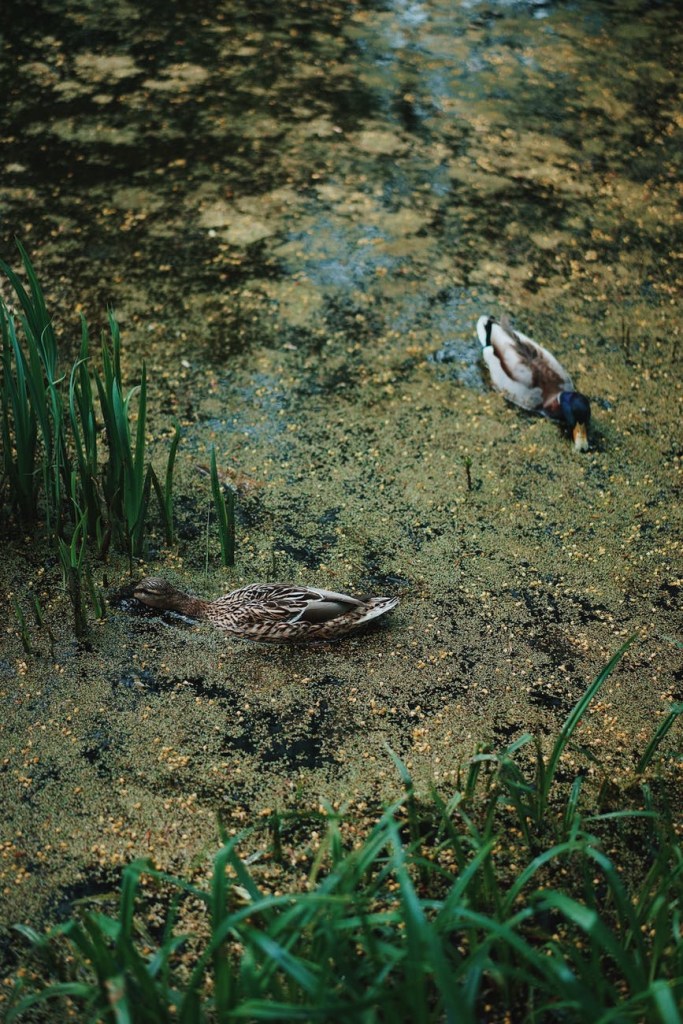
Algae: The New Energy
There are a lot of pessimistic comments being made about the environment in today’s time. People seem to focus solely on the negative aspects of the world, and not the good. However, amidst all their complaints and despairs, there are not many solutions being suggested to change the devastation they see in the future of the planet. Instead, there is only finger pointing and blaming. One of the areas where this is most prominent is the issue of harmful algal blooms. These situations arise when nutrients such as phosphorus and nitrogen leak into a water source and create an explosive growth in the algae growing there naturally. It completely offsets the balance in the ecosystem it is a part of and can be deathly to the fish and mammals there. Local agriculture stations are constantly blamed for these occurrences as the nutrients behind algal blooms can be found in fertilizers used on farmlands throughout America. Unfortunately, this information, and the steps needed to prevent it, is not as commonly spread throughout the country. It is the government’s responsibility to keep society educated with both the dangers of algal blooms and the proper ways to prevent them. Similarly, it is up to them to work with the Department of Energy and further the work done on the best solution available: use the excess algae to make an environment friendly biofuel.
It should be known that algal blooms are not always created by the influence of humans on nature. It is admitted in an article for the Science Direct that they can sometimes occur “as a natural aging process of aquatic ecosystems” (Li 249). However, with the heightened frequency they have been occurring in waters all over the world, studies have been focusing in to reveal how the process has been “accelerated under the interruption of anthropogenic activities” such as pollution (Li 249). Further research traced the nutrients polluting the water back to things such as runoff from agricultural establishments or wastes from domesticated areas (Li 250). These are known as point-sources, meaning they are a direct and known source (Li 250). Because of this, stopping the pollution is possible, but it requires the work of every individual to take their own part in the process. To allow individuals to know the steps necessary for them to help, they must be educated on the issue at hand. Government agencies such as the United States Environmental Protection Agency (EPA) and local extension agencies are taking small steps in these directions already but need to be pushed further.
The EPA has a website that lists ways to prevent water pollution in the house, yard, and classroom (“The Sources and Solutions: In and Around the Home.”). This needs to be expanded to cover ways farms can prevent runoff from their crops or pastures leaking into waterways. It would also be helpful for the website to be updated for easy access to all generations and citizens. As it is not a very well-known problem or agency, it would be beneficial to be implemented into schools for part of the science curriculum. A good way to do this would be to use the local extension agencies and the programs they already hold for the students at their local schools. Agricultural Awareness Day is an event for second graders of local elementary schools to go to a nearby farm and learn about different animals and parts of the environment. This would be a good time to teach about harmful algal blooms and begin to teach the proper ways to prevent them. The EPA website can be introduced then as well.
Starting with the young generation will ensure the information is spread as they grow and begin to interact with the world. From there, it will begin to become common knowledge as algal blooms would be a part of something everyone had to study as children, just as recycling and energy use was.
In the near future, lessons on algal blooms might be able to go hand in hand with lessons on energy conservation. With the decreasing supply of energy and the increasing demand for it, the U.S. Department of Energy (DOE) has been forced to look for new and abundant sources of energy in the environment. Because algae appears in an excessive amount during an algal bloom and is dangerous to simply leave that way, it could stand as the perfect fuel source when collected. It can create energy in many different ways, so the options are wide open. According to Zhiyou Wen’s article “Algae for Biofuel Production,” algae can be burnt for energy like other biomass fuels or the natural oils it is made of can be used to create a biodiesel (Wen). It can also “produce hydrogen gas under specialized growth conditions” or create a “crude bio-oil” (Wen). If there were to be a focus on transforming algae into energy, the problem of algal blooms would lessen dramatically as the excess algae could simply be harvested and used to power the country. With so many different and useful abilities, algae is almost the perfect energy source. However, just as almost everything has a drawback, harvesting harmful algal blooms as an energy source also comes with a few problems
The DOE has been looking into this option since the 1980s and still proclaims “that the algal biofuel production [is] still too expensive to be commercialized in the near future” (Wen). Because “the vast majority of biofuel processing facilities have been developed for dry feedstock,” the algae cannot be used to create energy until it has been dried out (Faivre). This can be an extensive process that simply “adds to expenses” (Faivre). If the algal biofuel was released today it “would cost between $12 and $16 per [gallon gasoline equivalent]” (Goss Eng). This takes all competition away between gas and algal biofuel as the greener option would simply be too expensive for regular citizens to buy. However, if work is continued as it is now, the DOE believes they could reach a point where the algal biofuel would cost “<$3 per gallon gasoline equivalent” (Goss Eng). This would save people hundreds of dollars as well as protect the environment from the harmful effects of using fossil fuels such as greenhouse gas emissions and oil spills. However, the estimated date that this will be an option is not until 2030 (Goss Eng). Until then, people will still be spending hundreds of dollars for a fuel that is slowly killing the planet unless there is more focus put on the research and production of algal biofuels. It may cost more money at the beginning, but the results will fully pay it back when people will be able to save money while fueling up their cars as well as save the environment they live in by lowering their effect on the natural process of things. Using less fossil fuels will help to lower the amount of greenhouse gases emitted into the atmosphere and, in turn, start to lessen the harm of global warming. Without spending a little bit more money and a little bit more time on algal biofuels this would not be possible.
There are a lot of things wrong in the world today. Harvesting fossil fuels is destroying the Earth just as using them starts to decay the environment in harmful emissions and global warming. These, and other pollutants get into the waterways and kill the clean water needed to survive. One of the most common and incredibly harmful examples of this is the occurrence of an algal bloom. These can produce toxins that kill fish and mammals that interact with it. Not even humans are safe from these horrendous situations even though it can be their pollution that causes them. Because of this, it is necessary for the government to better educate society on the dangers of algal blooms and how each person can take steps to help prevent them. This will help save the environment in the same way using it as a natural resource to create biofuel will help protect the planet. It may cost a lot of money up front, but it will save more money and more of the environment in the long run and so, it is worth it. Algae is necessary for aquatic ecosystems, but too much can be detrimental, so it might as well go to good use as an environment friendly biofuel.
Works Cited
Faivre, Kelsey. “Algae: A Possible Source of Biofuel for Iowa.” Iowa State University, 5 May 2016, http://www.inside.iastate.edu/article/2016/05/05/algae.
Goss Eng, Alison, and Colleen Tomaino. “5 Things You Need to Know about Algae.”Energy.gov, http://www.energy.gov/eere/articles/5-things-you-need-know-about-algae.
Li, Ying, et al. “Nutrient Sources and Composition of Recent Algal Blooms and Eutrophication in the Northern Jiulong River, Southeast China.” Science Direct, vol. 63, no. 5-12, 2011, pp. 249–254. ECO.
“The Sources and Solutions: In and Around the Home.” EPA, Environmental Protection Agency, 10 Mar. 2017, http://www.epa.gov/nutrientpollution/sources-and-solutions-and-around-home.
Wen, Zhiyou. “Algae for Biofuel Production.” Physics Letters B, vol. 603, no. 3-4, 31 Jan. 2014, pp. 189–194., doi:10.1016/j.physletb.2004.10.036.
This was just kind of a random post this week for a topic that I personally find interesting. If you actually read it, thank you. That’s pretty cool. Make sure to leave a like before you go, so I will know to appreciate all your effort.
I’ll see you next week for a more familiar post. Until then, stay safe out there!
 Here, There, and Back Again