
Hi world! Chris here. Sorry this is a week late, but I got busy making up dentist appointments and what not. Anyways, I’m here now and I wanted to talk about my big summer read. I’ve had Jane Eyre on my ‘to read’ list forever, but never got around to it until it was required for class.
As a big fan of Wuthering Heights (Emily Bronte is Charlotte’s sister) and classic literature in general, I was really excited to tackle Jane Eyre. Sadly, it did not quite meet my expectations. This week we can look at why!

Born into the poor family of a priest, Charlotte Bronte experienced first hand what it meant to be a woman of a low social class. She survived on charity both for her schooling and her father’s livelihood (Gao 926). Despite these humbling roots, she is known around the world as one of the first feminist writers almost 200 years after her death. Her novel, Jane Eyre, appears on almost every high school reading list where it is reveled for its modern depiction of women in Victorian England. However, with the ever shifting ways of society, there are some instances in the novel that fall flat of what we deem to be feminism now. In fact, these instances happen so often that it is enough to make one question how exactly the novel got where it is today. After careful consideration of Victorian society, Charlotte Bronte’s life experiences, and feminism itself, there is a compelling argument to be made that Jane Eyre is not the pinnacle it is made out to be.
Victorian England (1837-1901)
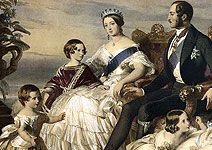
Given that this entire era of history was named after a woman ruler, one might expect it to reflect more feminist ideas. However, this was still a period that was both “man-controlled and man-dominated” (Gao 927). Job opportunities were mostly for men with the exceptions of teaching or serving as a maid. Unless a woman was born into a wealthy family, she had almost no way of taking care of herself other than marrying a man that could provide for her (Gao 927).
Jane, the heroine of the novel, lives through this fact as she begins the story as an orphan with no prospects other than to work as a teacher and later a governess at Thornfield. This choice to “be a free human being, with an independent will” instead of immediately seeking a husband to do it for her was bold and set her apart from the expectations of women to helplessly depend on men (Bronte 268). According to the article “Feminist Fridays: What’s the Deal with Jane Eyre?” from The Adroit Journal, this kind of self-aware “ability to make conscious lifestyle choices for herself is unarguably feminist.”
However, this fight to be a woman that works in Victorian England also has its flaws against feminism. Through Jane’s governess position, she meets the love of her life. He is her wealthy and powerful employer, Mr. Rochester (Bronte 124). While Jane still tries to retain her independence and refuses to marry him when trouble arises, he does become her ultimate goal which is not necessarily something modern feminists would agree with. Marriage in and of itself is not a bad thing (it is truly supposed to beautiful), but “it’s hard to deny that its origins were inherently patriarchal” (“Feminist Fridays: What’s the Deal with Jane Eyre?”).
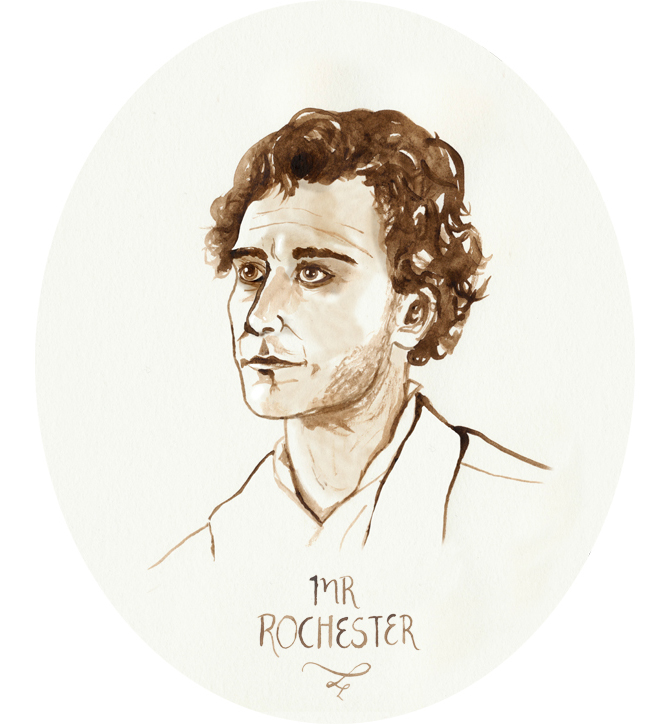
In Jane’s defense, she was living in a time when marriage was intently expected of her. It was no bad thing that she loved Mr. Rochester, but when she found she could not happily stay with him, her reaction verged on desolation. It was as if losing him was having “a morsel of bread snatched from my lips, and my drop of living water dashed from my cup” (Bronte 268). That kind of reliance is not something anyone would consider feminist.
“I don’t know about you, but I’m not to keen on the message that life is ‘desolate’ without a man to marry.”
-“Feminist Fridays: What’s the Deal with Jane Eyre?”
Charlotte Bronte (1816-1855)

Due to the financial status of the family and the unfortunate loss of Bronte’s mother, she and her sisters experienced a rather desolate childhood. Their father’s job kept them from settling in one place too long and both Bronte and her sisters were sent to a charity school where the living conditions were not any better (Gao 930). However, while her father lacked the means to provide physical gifts, he did bestow a strong sense spirituality on his daughters.
“Like many Victorians, Bronte was obsessed over the state of her own soul . . .”
– Emily Griesinger (30)
It is argued if Bronte was devoutly Christian or not as some of her surviving letters suggest that while “she practiced an authentic Christian spirituality,” she did so “on her own terms” (Griesinger 34). Whatever faith she followed matters little. As far as her expression of feminism is concerned, the only important part of her religion is the idea that it instilled a strong sense of right and wrong. This was a powerful influence in Bronte’s writing as “Jane’s actions are deeply rooted in her moral beliefs” (“Feminist Fridays: What’s the Deal with Jane Eyre?”).
Her morality was part of what made her independently feminist. It gave her the ability to chose her self-esteem over a man when Mr. Rochester offered to run away with her to France. She knew this decision would leave her “solitary” and “friendless” but she also knew it was her way to “respect myself” (Bronte 337). However, this loyalty to being right and good can also be construed as Jane putting the institute of marriage above her own happiness and thus letting society’s expectations govern her more than her own womanly desires. After all, it is only after Jane is finally married to Mr. Rochester that she is “gloriously happy” (Griesinger 38).
Feminism (Ongoing)

Coming in multiple forms and multiple waves, feminism is a concept that is not easy to define. One of the most common points in every movement is the idea of equality and human rights. When the first wave of feminism took place in the 19th and 20th centuries, that meant “gaining woman’s suffrage” (“Reading: The Woman’s Movement”). This was a different example of equal rights from those argued over in the second wave of feminism in the 1960s and early 80s. In this wave of feminism, equal rights meant accepting female sexuality, work opportunities, and reproductive choices (“Reading: The Woman’s Movement”).
These were two very different eras with woman fighting for what they needed at that moment in time. Just because the particular objective was different, does not mean that any of the woman involved would have thought woman in the other wave were more or less feminist than themselves. They knew the end goal of equality was shared between them all. With that in mind, it is time to look at Bronte’s Jane.

From one angle, she knew she deserved to be treated as well as her master even though she had no lands and almost no money. When he tried to exude control over her to calm her emotions, Jane was quick to remind him “I have as much soul as you–and full as much heart!” (Bronte 268). She would not be content to be belittled as an emotional woman and stood against the very idea. It was a very feminist speech for a time when woman were supposed to be “subject to the voice of men” (Gao 927).
However, Jane still chased the patriarchal idea of belonging to a man more than she chased her own freedom. In the end, she was only able to be Mr. Rochester’s equal in marriage after he had been badly injured in a fire (Bronte 480). This proves that while he was still a man of great fortune and power he was untouchable to her despite her previous talk of being the same as him. This kind of contradicting plot twist is what makes it hard for modern feminist to give Jane Eyre their stamp of approval (“Feminist Fridays: What’s the Deal with Jane Eyre?”). That does not mean that Jane is not a feminist in her own way.
Because of the ever shifting nature of feminism, it is impossible to solidify one single definition to last over time. When Jane Eyre was published in 1847, it was radical compared to the views of Victorian society. Now, that is not quite true. This difference in time does not mean that Jane Eyre should be taken off the feminist reading list. Instead, it should be added as a reminder of where feminism has come from. No, Jane Eyre is not the ultimate goal of the feminist movement, but it is a sign that there has been growth in that movement.
Works Cited
Bronte, Charlotte. Jane Eyre. Ontario, Canada, Broadview, 1999.
“Feminist Fridays: What’s the Deal with Jane Eyre?” The Adroit Journal, 15 April 2019.
Gao, Haiyan. “Reflection on Feminism in Jane Eyre.” Theory and Practice in Language Studies, vol. 3, no. 6, 2013, pp. 926-931.
Griesinger, Emily. “Charlotte Brontë’s Religion: Faith, Feminism, and ‘Jane Eyre.’” Christianity and Literature, vol. 58, no. 1, 2008, pp. 29–59.
“Reading: The Woman’s Movement.” Lumen, accessed from https://courses.lumenlearning.com/alamo-sociology/chapter/reading-the-womens-movement/.
 Here, There, and Back Again