Hi world! Chris here. I don’t claim to be a film critic, but I did take my first class on properly understanding and analyzing movies. Turns out it’s not all that different from looking at literature. So, I wanted to use this week of Redhead Reviews to talk about a classic “scary” movie that I only recently watched for the first time.
I’ve never had much of an interest in horror movies because I’m a big ol’ chicken, but I do enjoy psychological thrillers or suspenseful scary movies. Movies with jump scares just feel cheap to me and I’m not a fan. The Shining happens to fall into the first category, so it was actually quite entertaining to watch. It’s got a lot of scenes that get imitated in other movies like “here’s Johnny” and “Timmy’s not here Mrs. Torrance.” Knowing what those scenes actually look like in the original is nice.
Now, here’s my take on some of the ways Stanley Kubrick utilized elements in his scenes to create the feel of a scary movie without using any of the tropes most commonly connected with the genre.
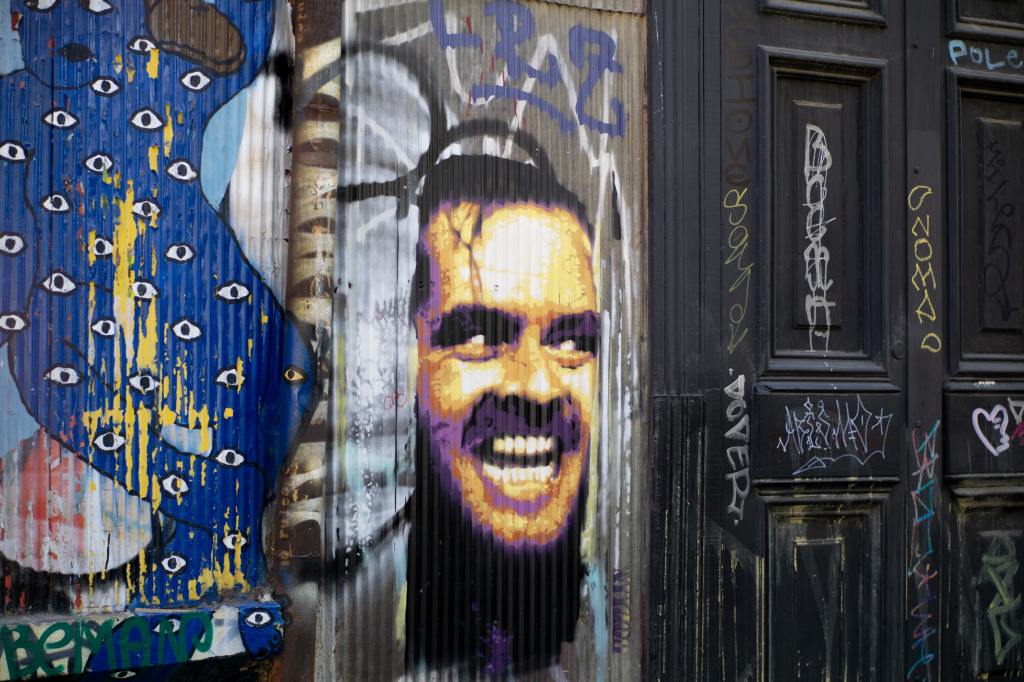
Arguably one of the most well-known and famously imitated horror movies, The Shining is a film that did not always hold so much admiration. Director Stanley Kubrick used the film to break down many horror tropes and experiment with his own visions of mise en scene to create new ways to scare his viewers. Shedding the cliches of cheap jump scares and darkly lit scenes, Kubrick relished in intense lighting to fully flesh out his use of symmetry and people placement as he created his horror movie classic.
The film takes place in the winter, as Jack Torrance works as the caretaker of the Overlook hotel with his wife and young son. Haunted by his gift of visions, Jack’s son Danny feels the danger of the hotel as his father slowly succumbs to the influence of insanity. Completely cut off from the rest of the world by both distance and the weather, Wendy and Danny are left to face Jack’s demented mind all by themselves as he gives in to his bloodlust and hunts them down inside the hotel (The Shining).
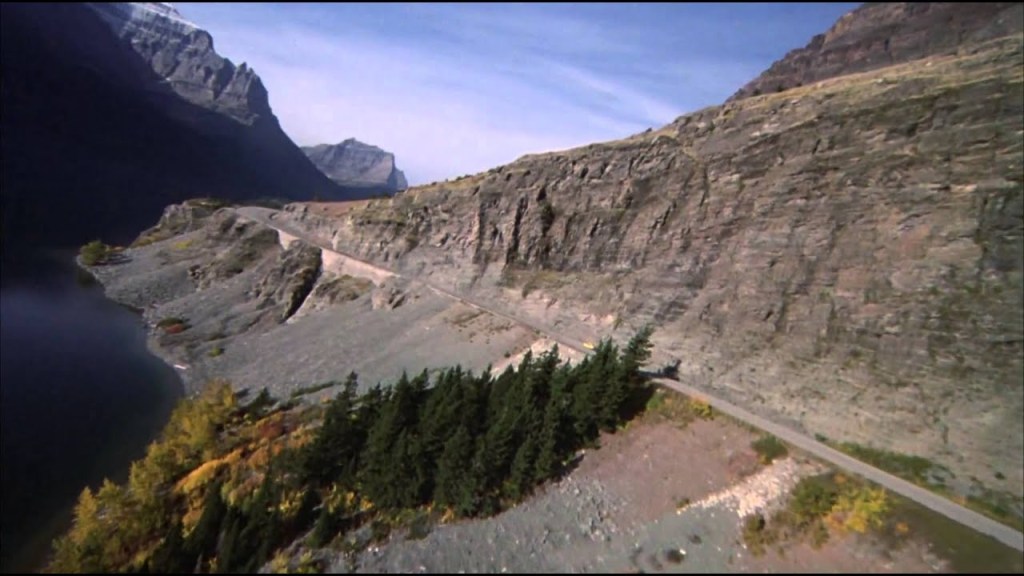
One of the first scenes of the movie involves a swooping shot to establish the Rocky Mountains setting. As the scene continues, the camera zooms in on a car before passing by it in another swoop. This kind of God’s-eye-view of the humans in the film is used to immediately set up how insignificant they are in comparison to the rest of the world. They are not even worth letting the camera settle on their faces when it zooms in. Some believe this was a purposeful shot on Kubrick’s part to show “the insignificance of the people in the eye of the director” (Byrne). In his time, Kubrick was known as a director that held “Olympian heights of genius” (Byrne). However, whether this shot was an echo of his personal opinions on others or not, it was a well-needed scene to establish the vastness of the world around the Torrances to make them look small and let the audience know they were going to be in danger.
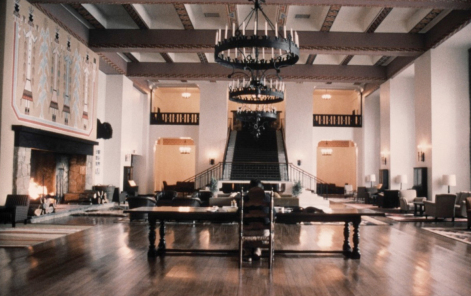
Almost in direct opposition to this growing idea of fear, Kubrick began to fill each scene with bright light instead of the typical dark and eerie light of horror movies that raised the fear of their audience as they wondered what was hiding in the shadows they could not see. However, there was a point to this too. Instead of making the light warm, Kubrick made it almost unnervingly bright, so it felt “sterile and impersonal” (Byrne). Even more than that, the lights also helped viewers to see the unique set up of the scenes that created the disorienting feel of the hotel.
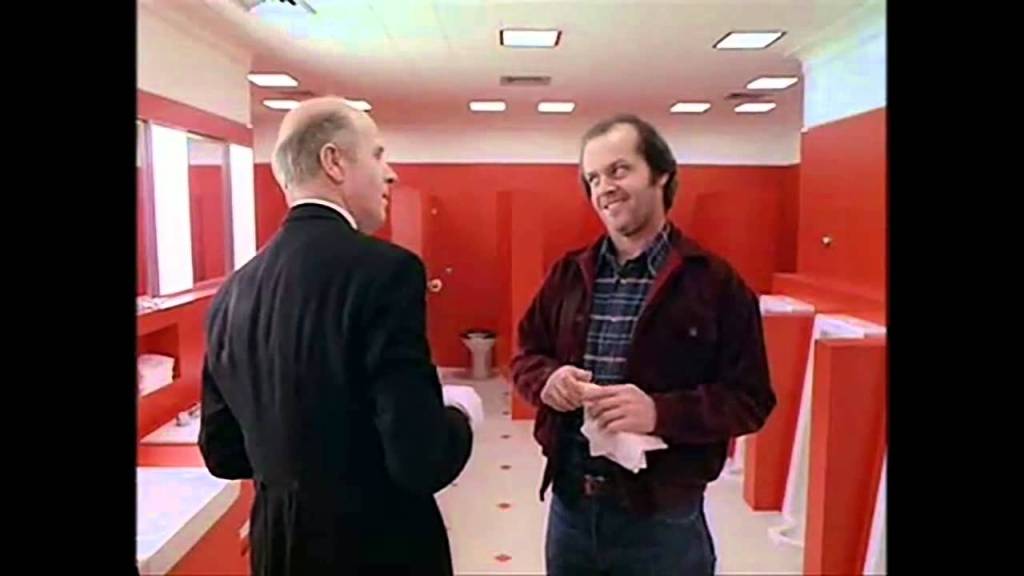
The Shining is filled with moments of symmetry and mirrors. Sometimes it comes through the repeated use of the blood red color that symbolized the danger and death that waited at the hotel. Sometimes it comes from two characters standing across from each other in the exact same stance. Both of these examples exist in the bathroom scene where Jack speaks to his alter ego that killed his family years ago (The Shining). They face each other in a completely red room lined with mirrors to symbolize that “they don’t exist together but are one and the same person” (Vries).
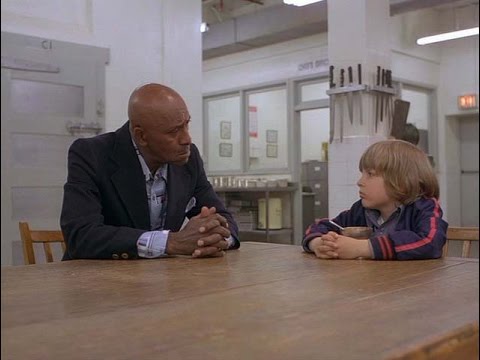
Kubrick also placed both protagonists in scenes that were meant to foreshadow their future or express their current situation. When Danny meets Hallorann, they sit across from each other in the exact same pose to symbolize the connection they have from being able to use the shinning (Vries). However, Danny is also sitting on the right side of the screen, directly under a set of knives to symbolize the danger that he is in by being in the hotel (The Shining). Later, when Wendy faces Jack on the stairs of the hotel, the audience can see a chandelier hanging over her head in the background (The Shining). This can also be a symbol for the danger hanging over her in Jack’s presence.
Watching this movie for class was the first time I had ever seen it because I am not a fan of scary movies. However, because of the mise en scene, this movie felt less like a horror movie and more like a thriller that relied on suspense and mental games to disturb the audience. That made me like it a lot more than I would have if it was just a scary movie. I enjoy movies that make me think and the intense set up of these scenes did just that.
Although some of these techniques earned the film ridicule when it originally came out, they are exactly what has made it age the way it has. The Shining may not be the first horror movie or even the best, but it is one that will stick around for a while longer. Kubrick’s genius use of lighting, setting, symmetry, and screen placement is just too good to be thrown away yet.
Works Cited
Byrne, Joseph E. “Mise-En-Scene in Stanley Kubrick’s The Shining.” English 245: Film Form and Culture, 27 Sept. 2013, engl245umd.wordpress.com/2013/09/27/mise-en-scene-in-stanley-kubricks-the-shining/.
The Shining. Directed by Stanley Kubrick, performances by Jack Nicholson, Shelley Duvall, and Danny Lloyd, Warner Brothers, 1980.
Vries, Hendrik De. “Symmetry and Mirroring in The Shining.” Frameland, 26 Apr. 2017, frame.land/symmetry-and-mirroring-in-the-shining/.
Next week I’ll be talking about a recent trip I took to Hanging Rock State Park! Until then, stay safe out there.
 Here, There, and Back Again