
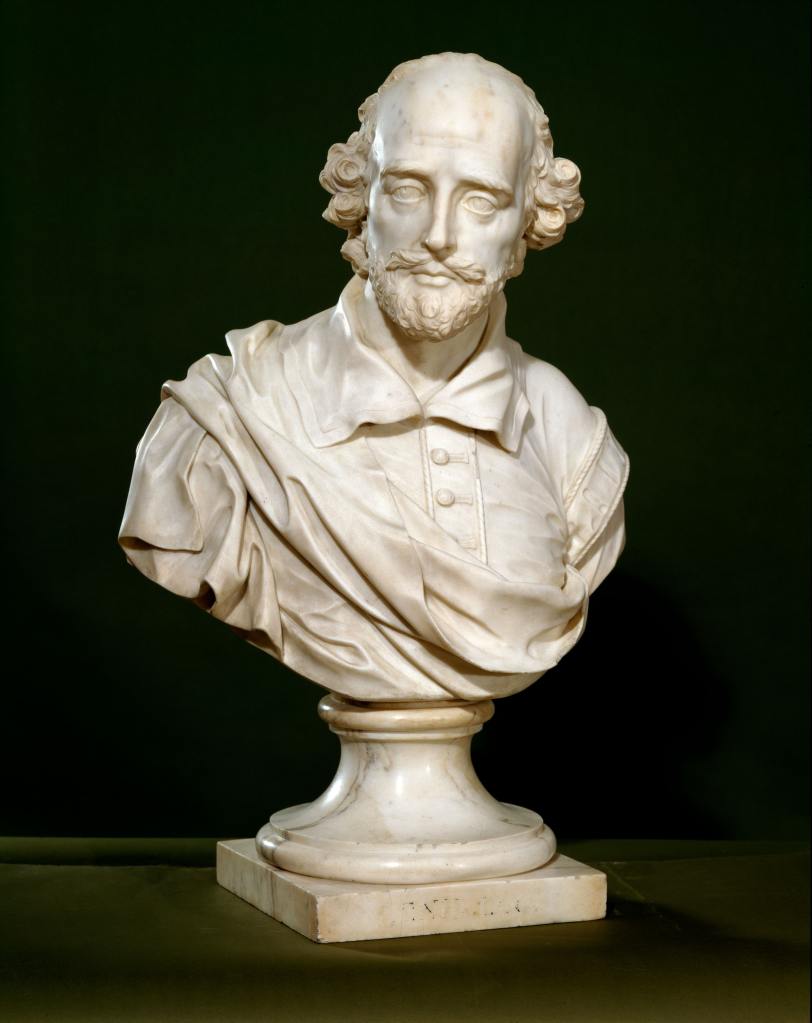
Hi world! Chris here. Ever since June started, I’ve been in the weirdest mood. You see, before the corona virus happened, I was supposed to be spending this month in London learning all about the great literature that originated there. I was even going to watch one of Shakespeare’s plays in the Globe Theater. Because those dreams have momentarily been dashed, I wanted to do the next best thing that I could. For me, that’s reading and writing about my favorite Shakespeare play; Twelfth Night.
This is one of Shakespeare’s comedies that involves a bunch of different people falling in love and playing pranks on each other. It’s basically the original romcom and I LOVE romcoms. However, as an English major that’s been trained to detect anything that could potentially lead to an essay, I couldn’t help but notice something a little shady about Olivia and that’s where this super simple essay came from!

Can’t Buy Me Love
Across the world, there are several popular and well-known symbols of love. These things are often gifted from one romancer to the next on the conquest of finding the person one hopes to spend the rest of their life with. Usually they have little meaning beyond ‘I love you.’ However, in Shakespeare’s play, Twelfth Night, he makes Olivia partake in passing tokens to her favorite suitor that each stand as symbols for something that goes a little beyond being in love.
The play holds a reoccurring theme of status and wealth as it tackles Malvolio’s feelings for Olivia, Maria and Sir Toby, as well as Viola’s love for the Duke Orsino. However, this theme hits a brand-new point when Olivia falls for Cesario, the disguise of Viola in man’s clothing. Upon their first meeting, Olivia is almost instantly in love, but Viola, a straight female that is aware of the shared gender between them, doesn’t feel the same. In an attempt to further their acquaintance, Olivia gives her messenger a ring to take to Viola/Cesario, claiming he left it with her. As a ring is often used to symbolize the eternity of a relationship, this can be viewed as her admitting she feels for Cesario and wants to be with him for as long as they can. However, later in the play, Olivia states that “youth is bought more oft than begged or / borrowed” (3.4.3-4)1 and reveals the true intentions behind her gift as she was actually trying to buy his love in return for her own.
This concept can be supported further by the fact that rings are also a symbol of status and wealth. Olivia is a high-born lady with plenty of money and land to herself. Viola, still disguised as Cesario, is a simple servant to Orsino. There is an obvious gap between where they belong both socially and economically, but Olivia’s gift hints to the idea that she’s willing to pay to close that gap if he would simply be hers.
Unfortunately for her, Viola disregards this advance as she is the only one aware of the fact that Olivia would not love her if she knew that Viola was truly a woman. Still, Olivia does not give up her pursuit and eventually places her gifts upon Viola’s twin brother when she believes him to be Cesario. Sebastian makes a speech about this, recalling “this pearl she gave [him]” (4.3.2) and the “flood of fortune” (4.3.11) that has also come with Olivia. It appears that Olivia is trying a different technique from the symbol of the ring as pearls can be used to symbolize humility and generosity. She is clearly aware of the financial gain her lover could obtain from marrying her, but she’s using the pearl to try and level herself with him, reminding him of how humble she is. She’s trying to shorten the appearance of the gap between their social classes instead of reminding him how much richer she is than him. However, by using a precious jewel to do this, she is still attempting to bribe him into loving her instead of truly creating authentic feelings between them.
By the end of the play, Olivia manages to catch one man with her money and her ability to “sway her house [and] command her / followers,” (4.3.16-17) which is just another sign of her wealth and noble birth. Of course, it is assumed that Sebastian’s feelings for Olivia are true by the time the play is over, but when one recalls how he arrived in the play lost and almost completely alone, it does make you wonder.
Note
- William Shakespeare, “Twelfth Night”, in The Complete Works of Shakespeare, ed. David Bevington (Pearson, 2014), pp. 333-370. Future citations of “Twelfth Night” are to this edition and will be noted parenthetically by book and line numbers in the text.
Citation
Shakespeare, William. “Twelfth Night.” The Complete Works of Shakespeare, Edited by David Bevington, Pearson, 2014, pp. 337-369.
P.S. Amanda Bynes stared in a modern retelling of this story and it’s great. Check out She’s the Man if you’re interested. And stay safe out there!
 Here, There, and Back Again