
Hi world! Chris here. I know my last post said I would only be updating biweekly, but I feel like limiting my content like that last year stunted some of the growth I saw before I had to cut back. Unfortunately, I’m still in the same predicament of having limited time to write and to go and do things to write about. So, I decided to try something new.
While I love getting to do random and fun things and then write about that, I also think I would love getting to use all this literary knowledge I’ve been gaining at college. Because of that, I’ve come up with this side-series that’s all about analyzing what I read, watch, listen to, etc. It’s a bit more on the academic/educational side of writing instead of the usual informal posts, but sometimes it’s good to change things up and try to spread a little information. Plus, if you’re in school, maybe this will help you! I mean I sure hope by this point that I know my stuff when it comes to English.
Not each Redhead Review will be strictly academic style writing either. Some weeks I actually want to review things in a more opinionated style to recommend them (or not). This week just happens to be a literary essay because I already had it on file from a class years ago. That’s also why it’s so short.
I don’t really feel like I explained this all that well, so please just keep reading and give this new section of the blog a try!
It’s More Than Witty Banter
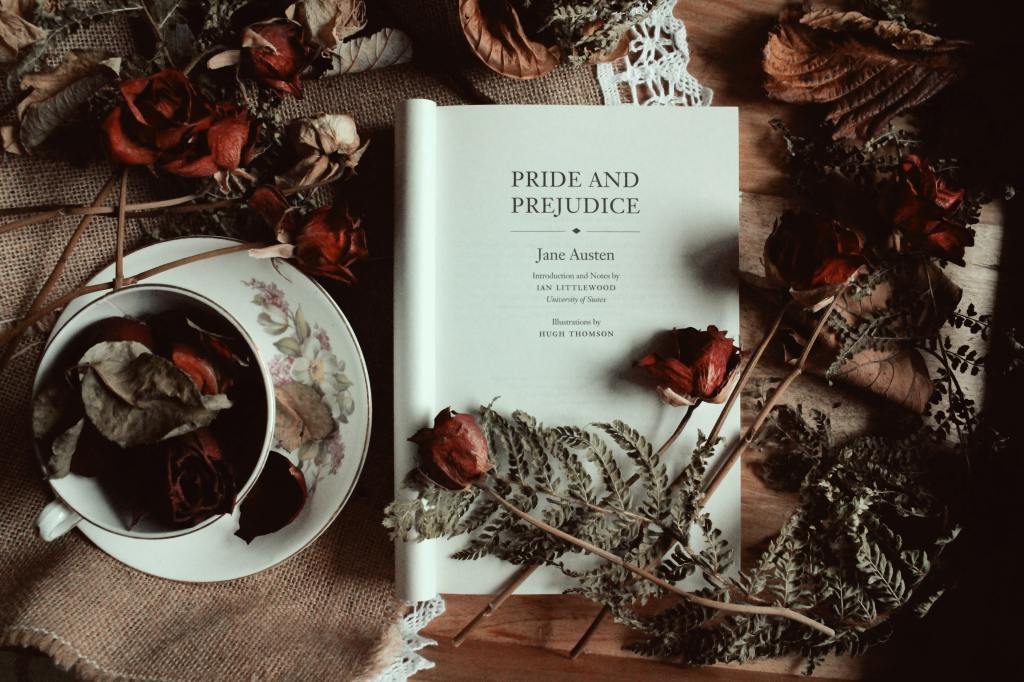
Few authors are more well known for their intelligent and willful female characters than Jane Austen. In her novel Pride and Prejudice, the protagonist, Elizabeth Bennet, is perhaps the most famous for this. She is a feminist icon for her independence and brave ability to stand up against, and even defeat, Mr. Darcy in verbal disagreements. However, the clever conversations that take place throughout the novel aren’t just words to make the reader swoon for the tall, dark, and rich stranger. Austen uses her form of dialogue as well as free-indirect discourse as key components in the characterization and interpretation of the characters by each other, and by the reader.

While they may not be the most popular conversations, some of the most interesting dialogue to dissect comes from the dreaded cousin, Mr. Collins. By just glancing at the unnecessarily long quotes from this character, one knows that Austen uses his dialogue to show how he overcompensates for his low wealth and status. He wants to make others look at him with the respect they would show for a man beyond his station. This is especially obvious when he says “the clerical office [is] equal in point of dignity with the highest rank in the kingdom” so that he can introduce himself to Mr. Darcy despite being so far beneath him (Austen 18). Another example comes when he says he tries to compliment women by “suggesting and arranging such little elegant compliments as may be adapted to ordinary occasions” (Austen 14). He immediately becomes an object of disgust for both reader and characters as they cannot be won over by flattery as he claims all women can be. He had intended this speech to be charming and sophisticated so that he would impress them by his superior views on women, but it simply made him into a fool.

Sometimes dialogue isn’t necessary for the reader to interpret a character and their intentions. In this case, Austen uses free-indirect discourse so that the narrator takes on the opinions of the character in the scene. The novel itself is started in this form as the idea that “a single man in possession of a good fortune must be in want of a wife” comes directly from Mrs. Bennet and not the narrator (Austen 1). This immediately sets up the goal for the mother as she tries to marry off each of her daughters to any eligible bachelor that comes into their lives. For the reader, it creates a sense of humor as the mother is so silly in her pursuit of this goal, but for Elizabeth, it creates tension as this discourse turns her and her mother into contrasting foil characters.

In the first description of Mr. Darcy, this technique is used again as the narrator goes from stating opinions by using words such as “the gentlemen pronounced” and “the ladies declared” to making factual declarations without saying who was actually thinking them (Austen 3). Austen writing “he was discovered to be proud, to be above his company, and above being pleased” instead of writing they ‘believed’ he was proud is a prime example of free-indirect discourse to characterize Mr. Darcy (3). But, in another way, it also characterizes the town as a shallow crowd that had first found him handsome only because he was rich and turned on him when he acted rude. This is yet another character trait that is further revealed and resolved through dialogue and free-indirect discourse in this truly epic love story.
References
Austen, Jane. Pride and Prejudice. New York: Modern Library, 1995.
(Pictures linked to original website)
 Here, There, and Back Again